
At the Outdoor School Istanbul (OSİ), every class creates and publishes its own book each year. While the teachers bring the final story to life through writing and design, the ideas always begin with the children. Our, German group, Green Linden class (ages 2–6) embarked on a magical journey. It lasted for many months and grew into a story filled with imagination, friendship and care for nature.
What started as a simple forest activity soon became one of the children’s favourite projects of the year.
During one of our regular forest visits, we invited the children to create their own little forest goblins from salt dough. Before we began, we told them about magical creatures that quietly live among the trees. Invisible to humans, these forest goblins protect the woodland. They also care for the plants and animals, and make sure the forest remains healthy and full of life.
Each child shaped their own unique goblin, giving it its own personality without any limitations. Once the goblins were finished, the children carefully built homes for them using natural materials they found around them. Since salt dough is harmless to nature, the goblins stayed behind in the forest. The children’s imaginations believed they would come to life once we had left.


When we returned to the forest some time later, the first question everyone asked was, “Where are our goblins?” The children eagerly searched the places where they had left them. This opened the door for many wonderful conversations about the hidden world of the forest and the magical creatures that quietly protect it.
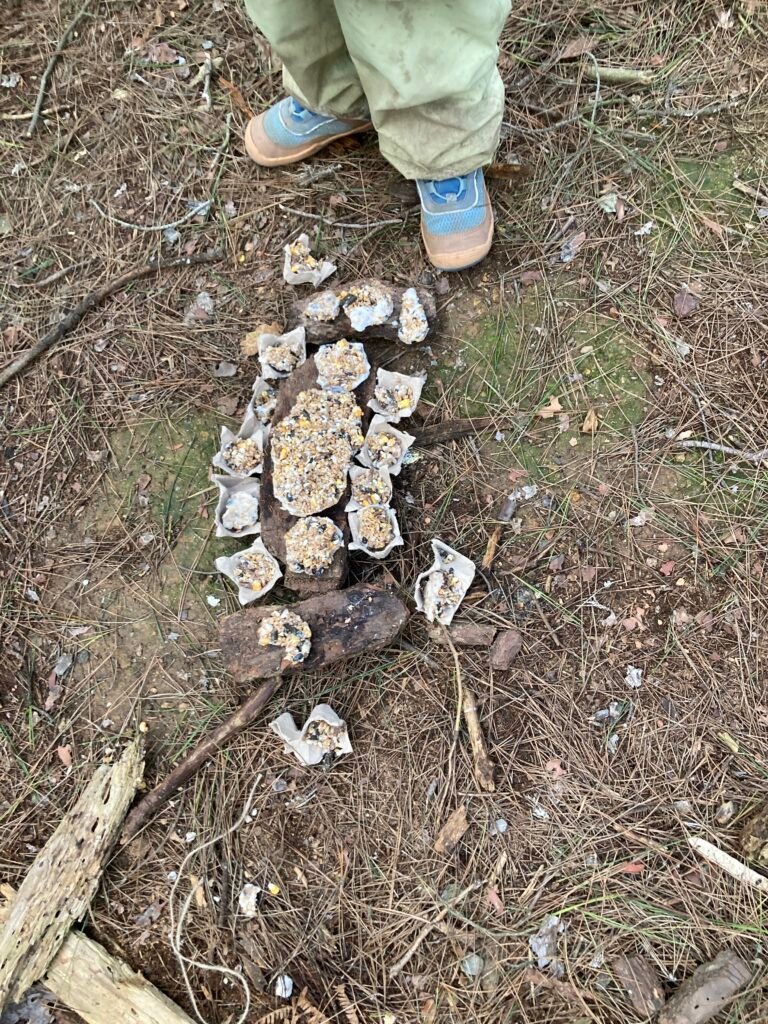
On that visit, we also brought handmade bird feeders made from seeds and coconut oil. Together, we imagined preparing a feast to thank the goblins for taking such good care of the forest. The children carefully hung the feeders throughout the woodland, knowing they would also provide food for the birds and other forest animals.
Back at kindergarten, the children’s fascination continued to grow. They created a second collection of goblins from salt dough, baked and painted them. Later they brought them back into the forest to build new homes. At the same time, each child invented their own goblin character, deciding its name, appearance, special responsibility and home. Some goblins lived high in tree houses, others underground, in caves or in wooden cottages. Every goblin had an important role within their magical community, reflecting the wonderful creativity and individuality of each child.
As the months passed, the forest goblins became a constant part of our daily life. We read stories, invented new adventures together and often returned to the forest. The children continued to expand the magical world they had created.


Then something remarkable happened:
During one of our walks, the children began noticing increasing amounts of litter scattered throughout the forest. They expressed genuine concern for the animals, the plants and, of course, their beloved goblins. The children had already formed such a strong emotional connection with this imaginary world. hey naturally wanted to protect the real one.
The idea for solving the problem came entirely from the children themselves. Inspired by a theatre performance they had recently watched at kindergarten and building on previous discussions about recycling and waste separation, they imagined a magical recycling machine. In their story, the forest goblins build this extraordinary machine to transform litter into useful objects for the forest and its animals, helping to restore and protect the woodland they love.
This became the heart of our class book, The Forest Goblins and the Magic Recycling Machine. The opening pages introduce each of the ten unique goblins created by the children, before the story unfolds into an adventure about teamwork, environmental responsibility and hope.
Looking back, the project became much more than a book. It demonstrated how children’s imaginations can lead to meaningful learning experiences. Rather than being taught to care for the environment, they first learned to care deeply about their goblins and their magical home. From that emotional connection grew genuine empathy for the real forest around them.
The Forest Goblins accompanied us throughout much of the school year, inspiring storytelling, creative arts, outdoor exploration and countless conversations. Most importantly, they reminded us that sometimes the smallest imaginary creatures can inspire the biggest acts of care for the world we all share.
Lara Bahşi (OSİ German Group Teacher)


