
When working on a project with children, where we begin truly matters. If we start from scratch, the learning becomes more meaningful since we provide children the opportunity to be both witnesses and active participants in the journey from raw material to finished product. We invite them into the full story of making. They do not just see the final result; they become part of the slow, transformative journey from “what it is” to “what it becomes.”
In our summer camp, for our “touch” week, we designed a sensory-rich activity around making a pillow. This journey began with a simple question: “What can we use to make a pillow? The children explored three options: stones, woodchips, and a bag of rough, smelly wool. We stuffed each material into a cover and tested them one by one, laying our heads down to see which one felt the most comfortable.
The stones were too “hard”.
The woodchips were “pokey”.
But the wool, despite its smell and roughness, held a promise. But how something so rough and smelly could ever become a soft pillow. This moment of curiosity was essential.
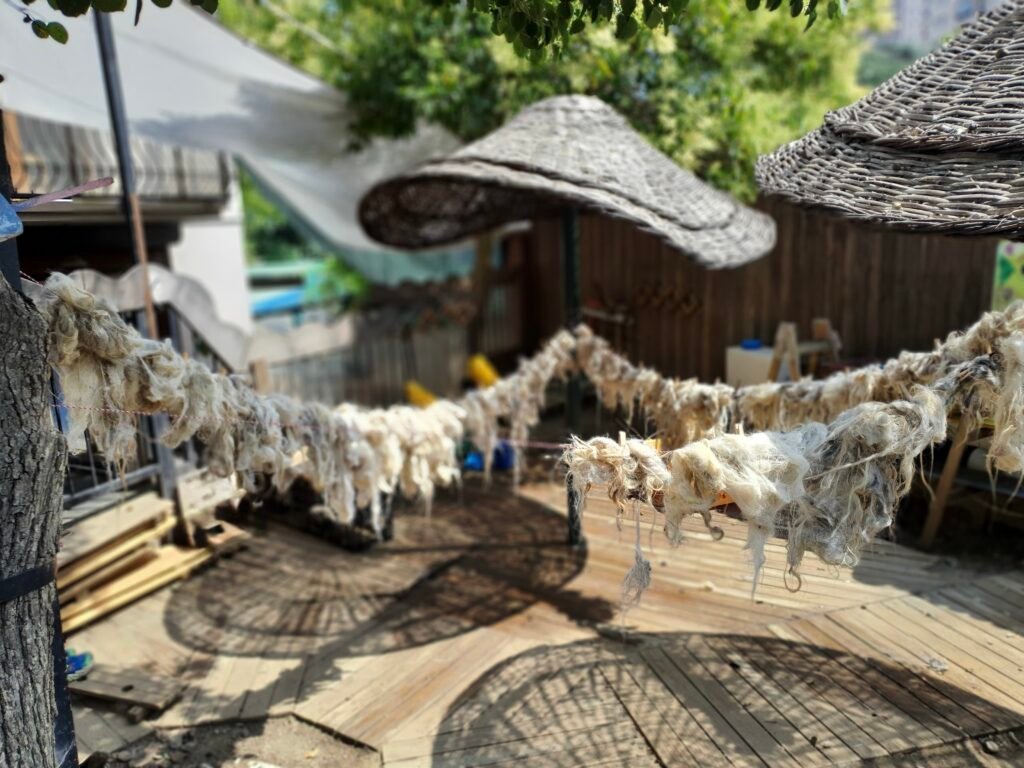
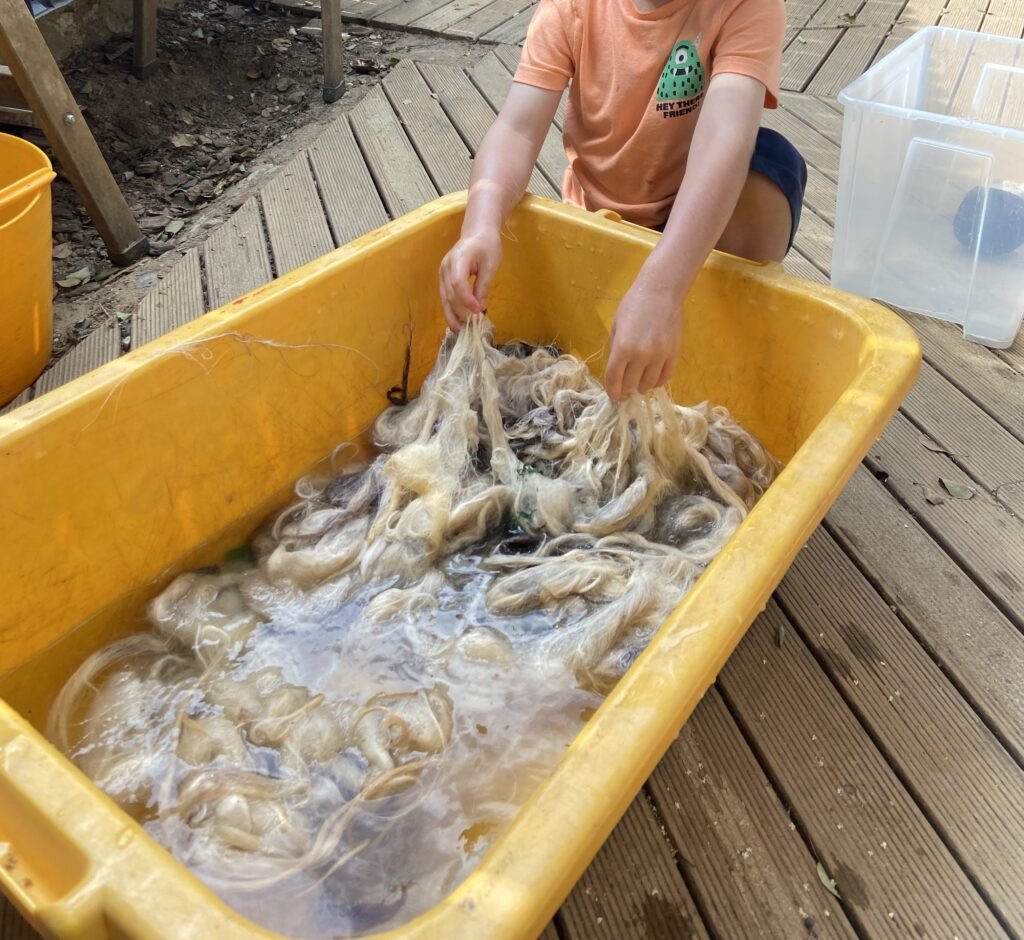
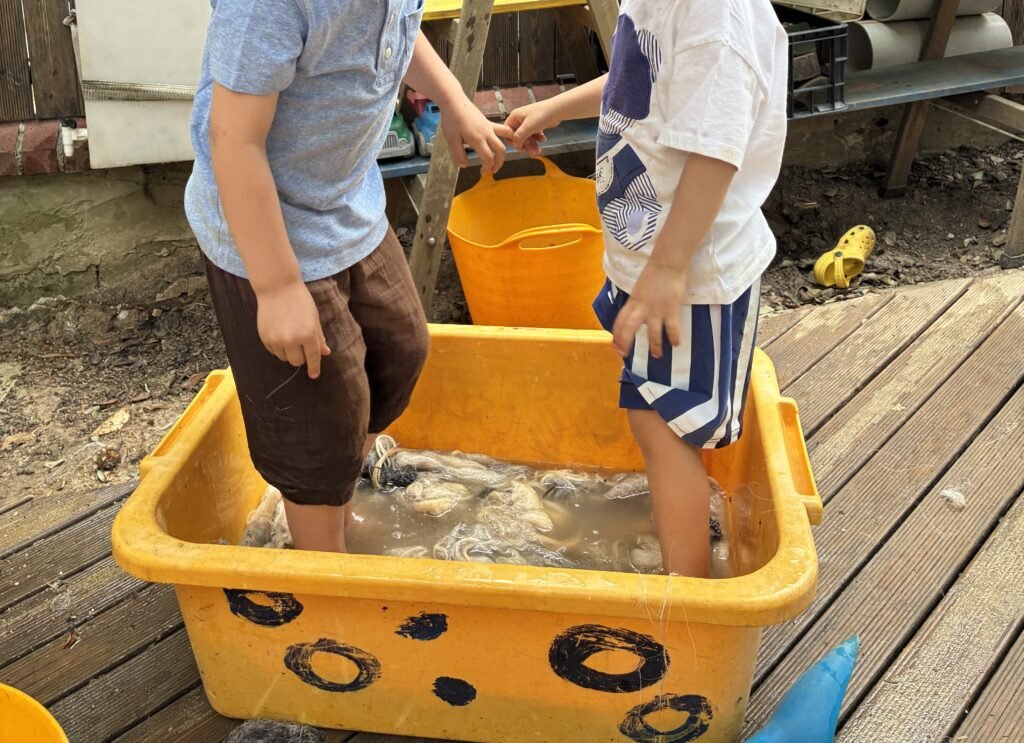
Following traditional methods, the first step was washing the wool. The children placed it in water and cleaned it with their hands and feet, laughing, splashing, and noticing how the wool slowly changed. We hung it up to dry, and by the next morning the unpleasant smell had faded.
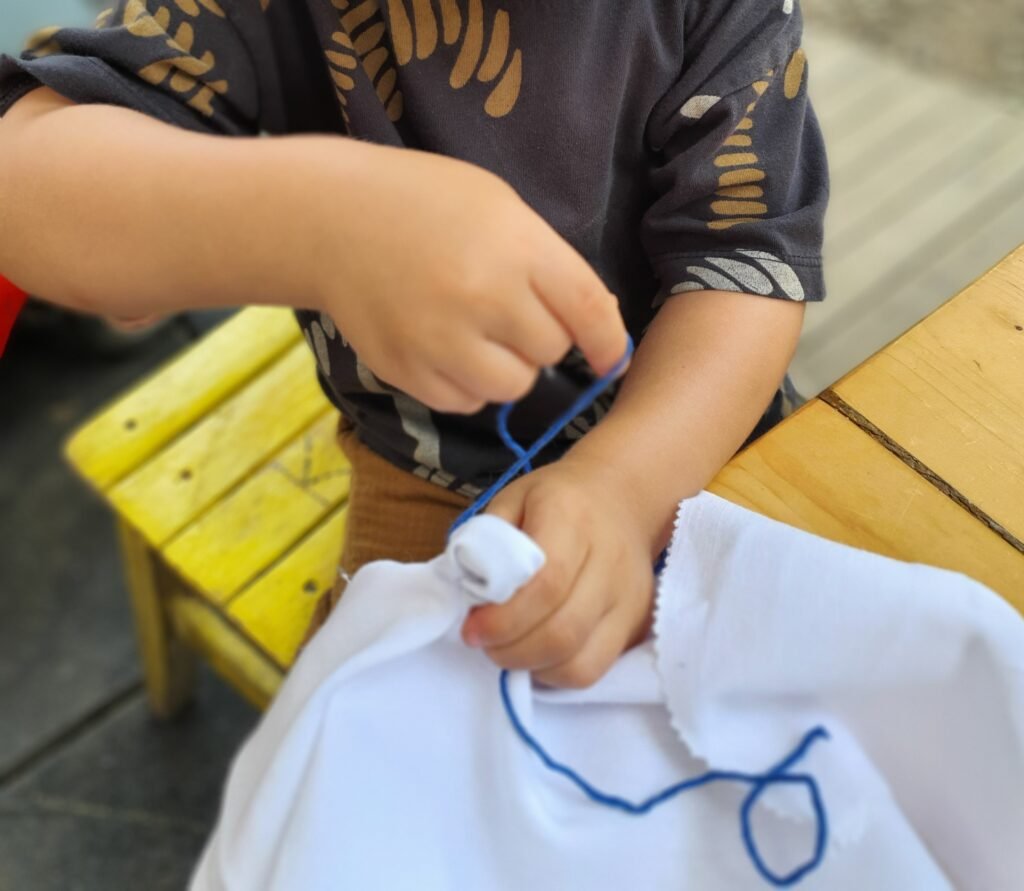
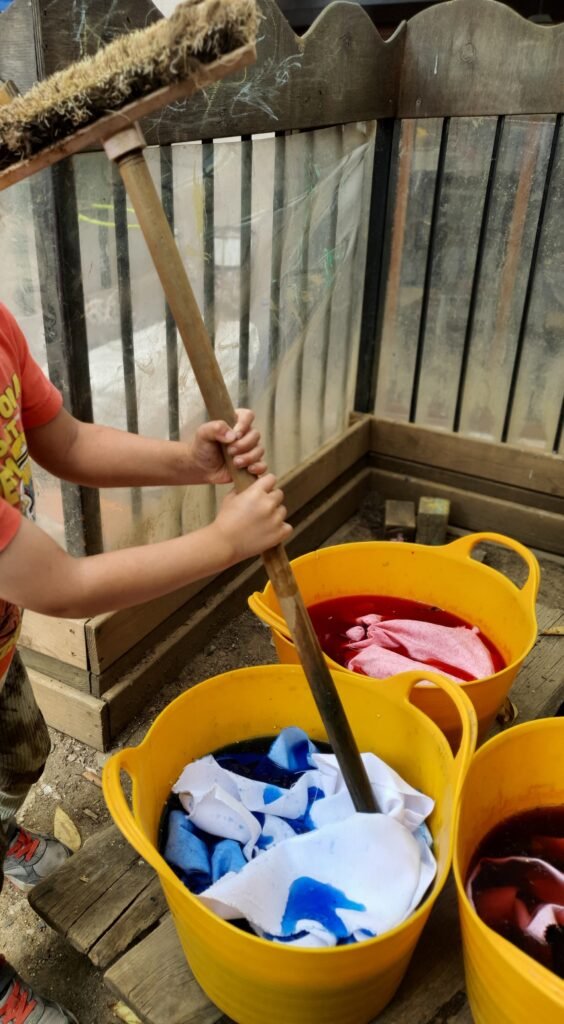
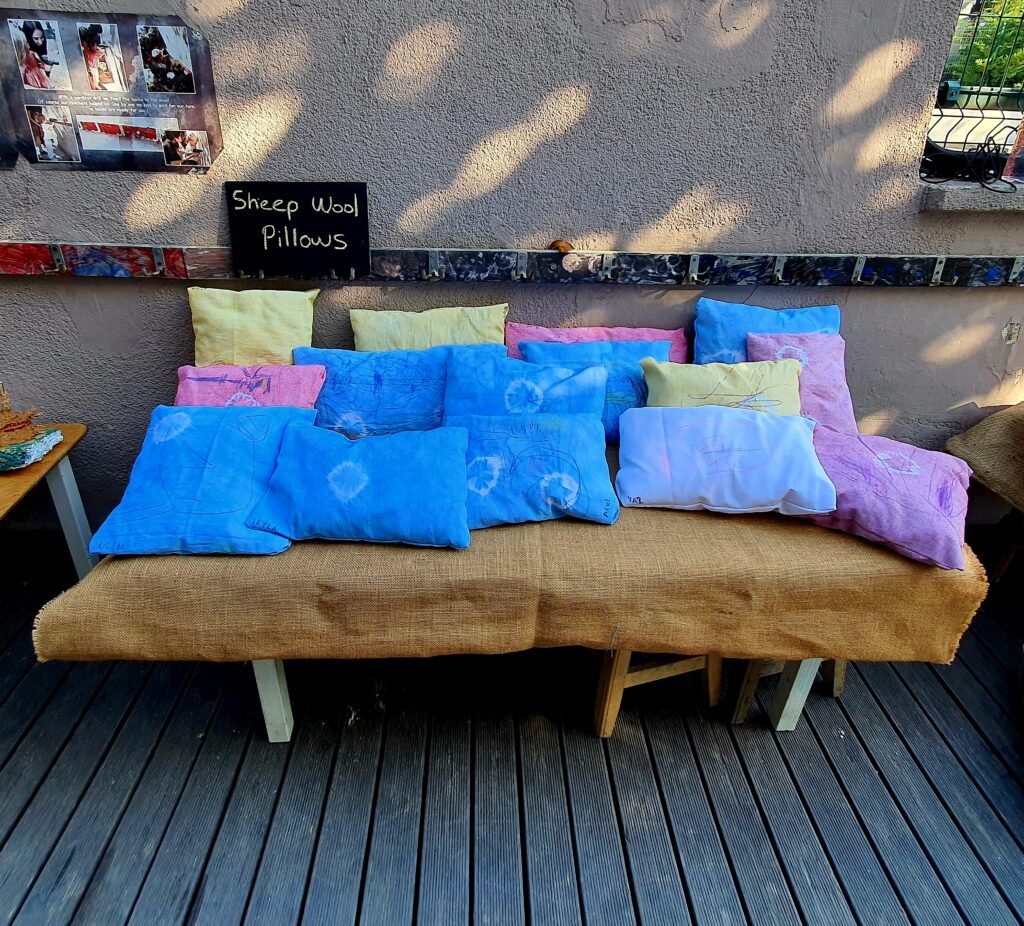
Then came the work of beating the wool with sticks to fluff it to make it light and soft. When the material was ready, the children sewed their own pillow covers, used tie-dye method to color, and finally filled their handmade cases with the wool they had prepared. Adding their own drawings and details was the last step to make them even more individual.
It took almost five days of steady, hands-on work to complete this project; five days that taught the children, and reminded us teachers, that creating something meaningful takes time, patience, and effort. In a fast-paced world where we constantly receive ready-made products, it is important to slow down, use traditional methods, touch, feel, and understand the process.
Tuğçe Kasap Bilaloğlu