
When engaging in project-based learning with children, not every meaningful project begins with a plan. Sometimes, it begins with a simple walk in the forest and a small discovery hidden under a stone. When we move through the world with open and curious eyes, even the smallest discoveries can become the beginning of deep and memorable experiences.
Throughout this school year, our group “Red Mulberries” visited Atatürk Kent Ormanı several times. Therefore, The forest became a familiar place for the children. They built shelters out of sticks, played games between the trees and explored the changing details of the forest floor. Each visit brought something new to notice.
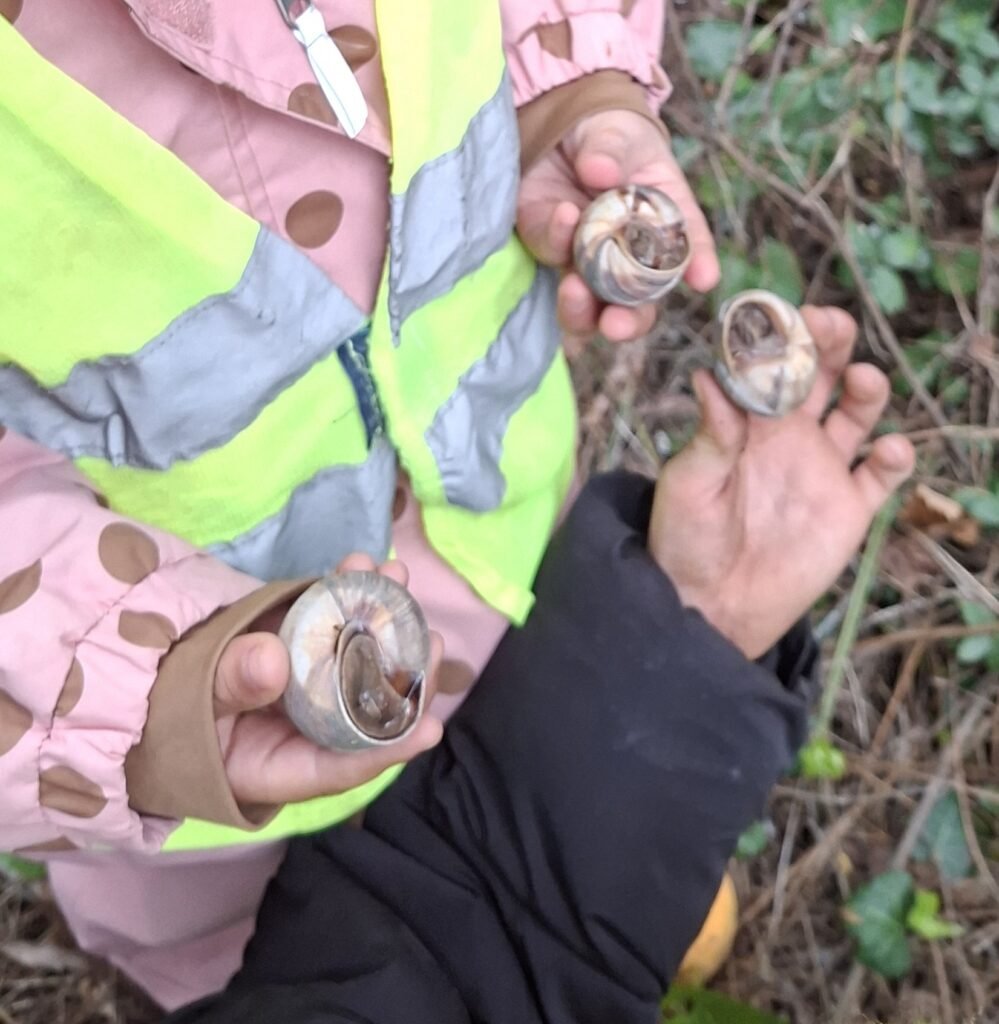
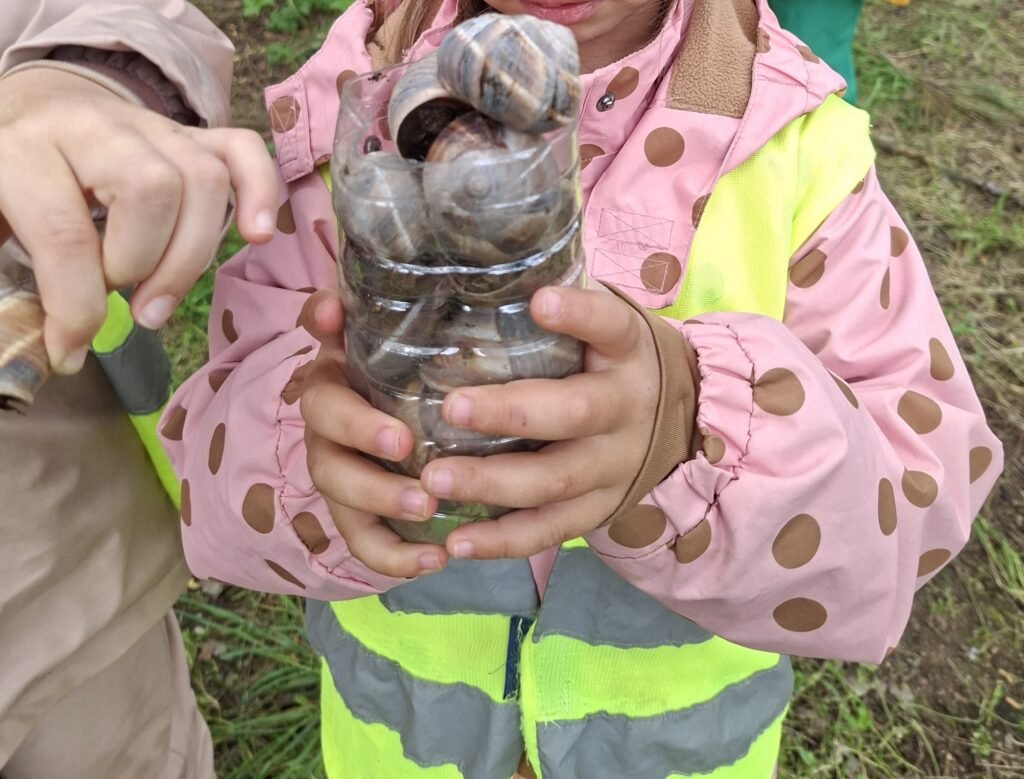
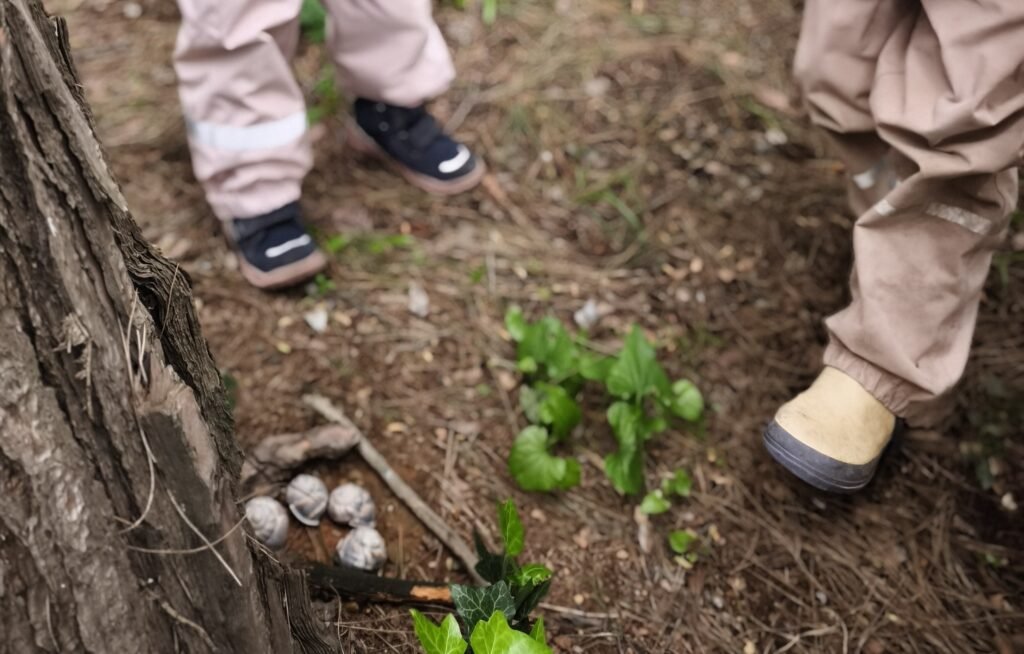
On one of these visits, the children wanted to walk through the forest in search of treasures. In the past, these treasures had been interesting stones or colorful leaves. This time, they discovered many Roman snails on the ground. The children carefully looked for them, collected them for a while and planned to create a nice area for them near our shelter, with fresh leaves after our walk.
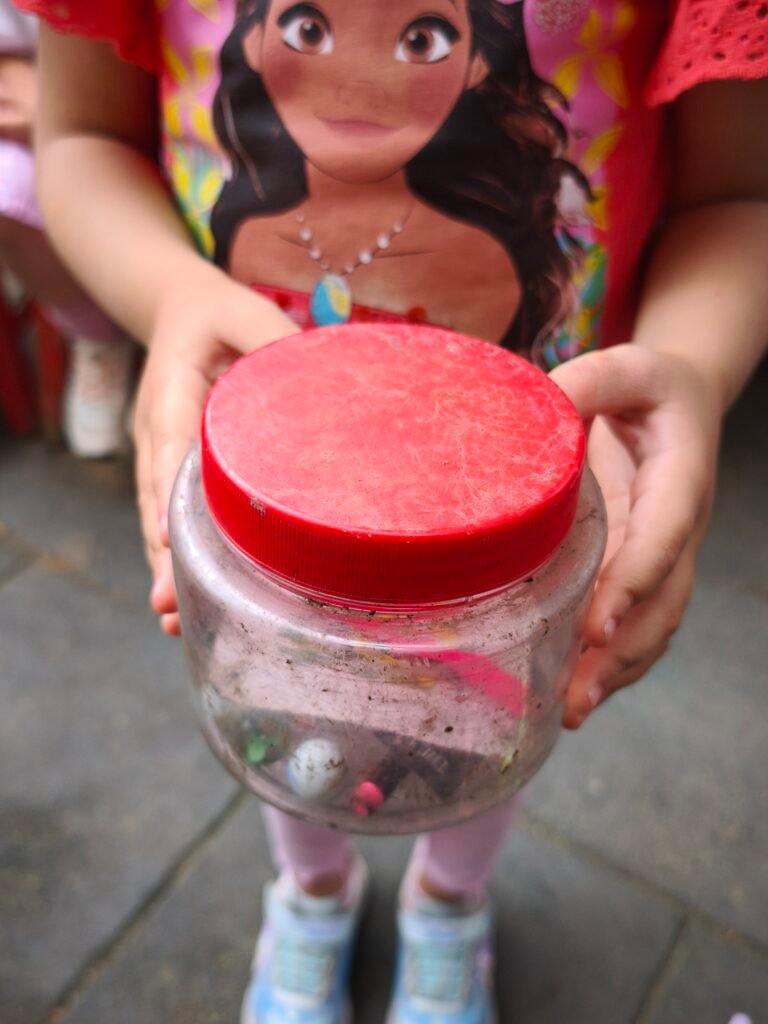
While continuing through the forest, some children also noticed larger rocks and decided to collect them. Near the end of our walk, one child spotted another ordinary-looking rock in the bushes. But when he tried to pick it up, something unexpected appeared underneath. There was a hole in the ground and inside the hole was an old plastic container.
In that moment, the feeling changed. This was no longer just a stone or a leaf. The children felt they had found a real treasure.
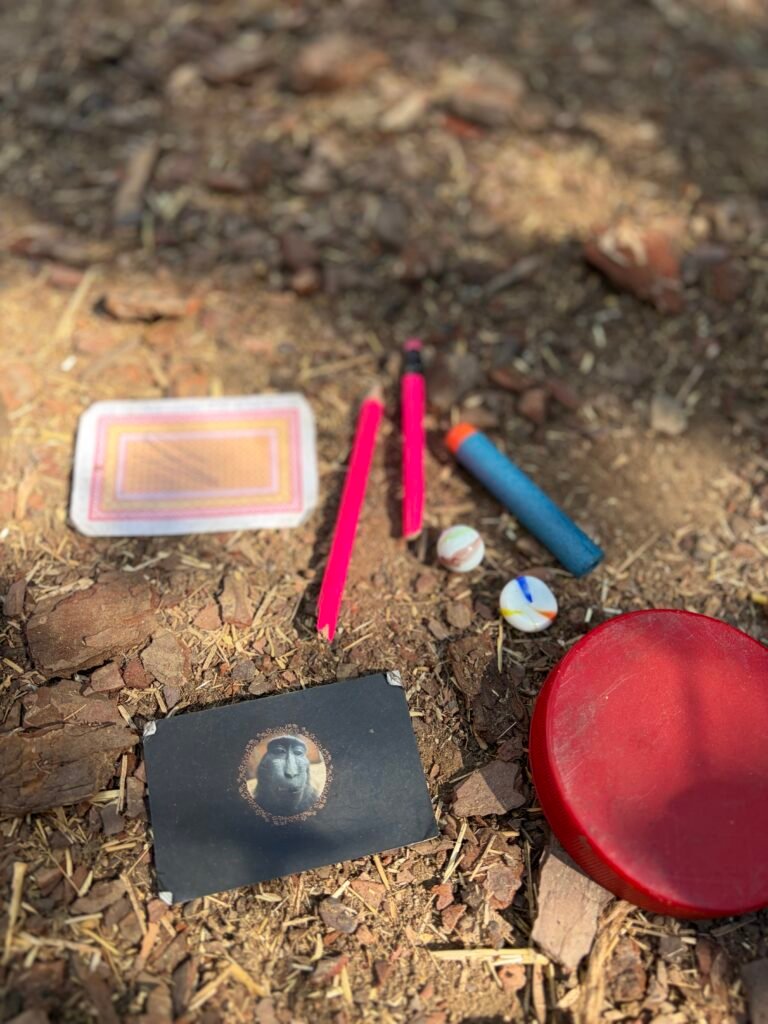
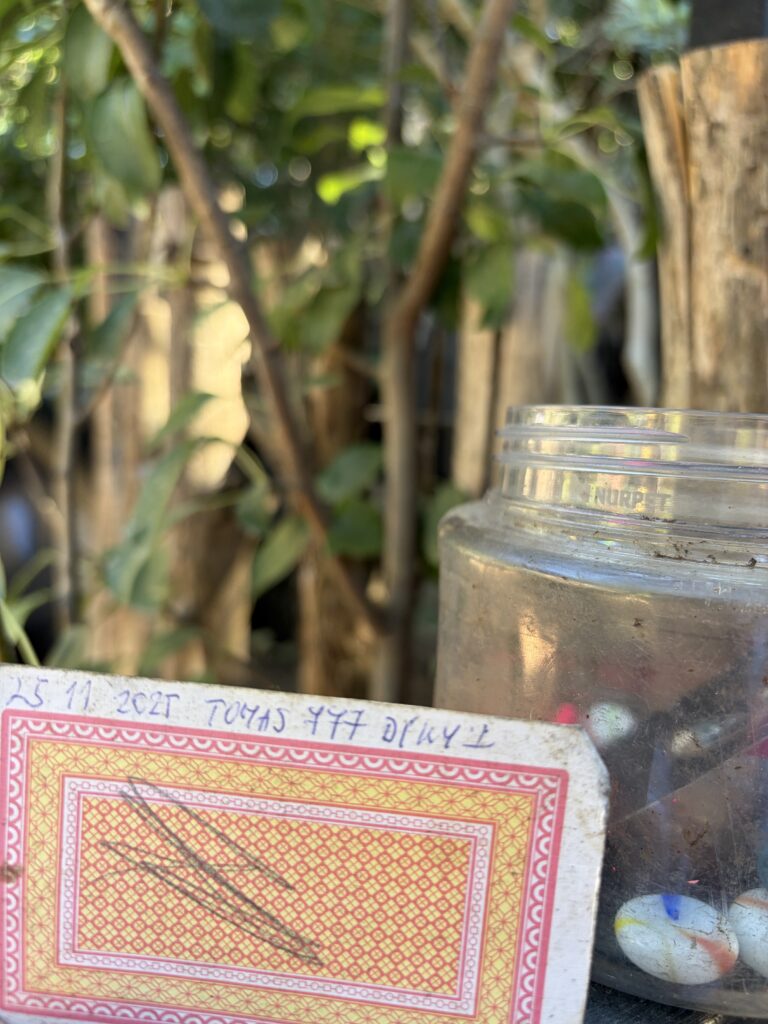
Inside the container were colorful pens, a glass marble, some paper, and a card from a playing deck with a name and date written on it. The children were proud, excited and full of questions. Who had placed it there? How long had it been hidden? Was it meant to be found?
This small object, hidden under a rock, opened a new story for us.
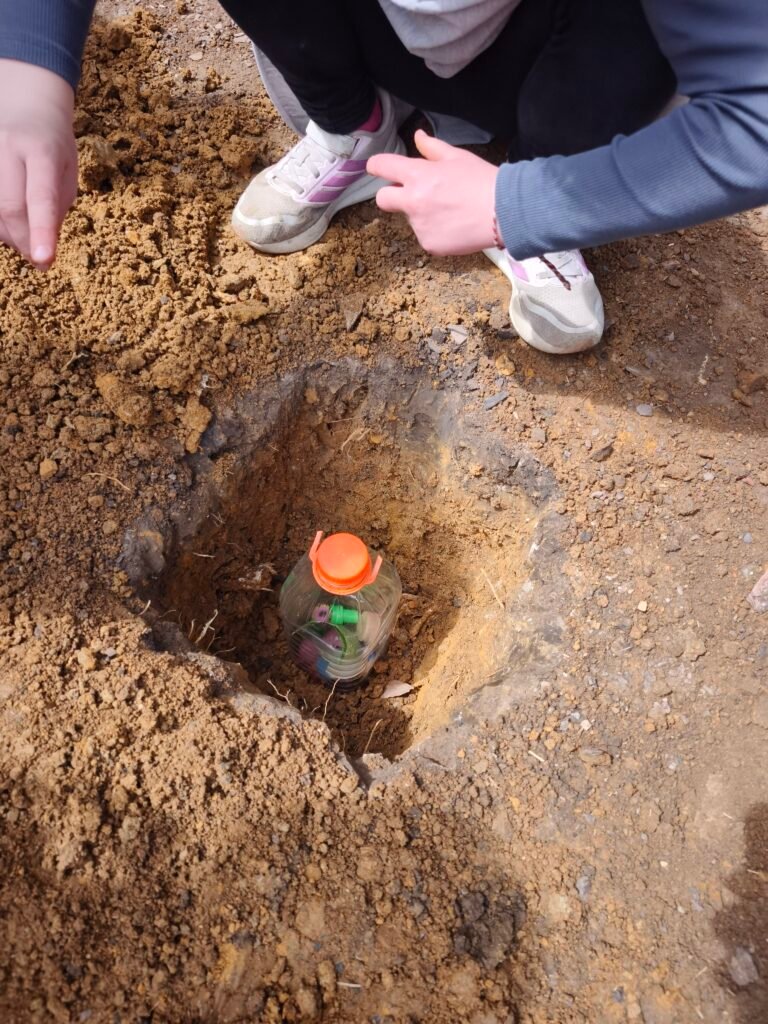
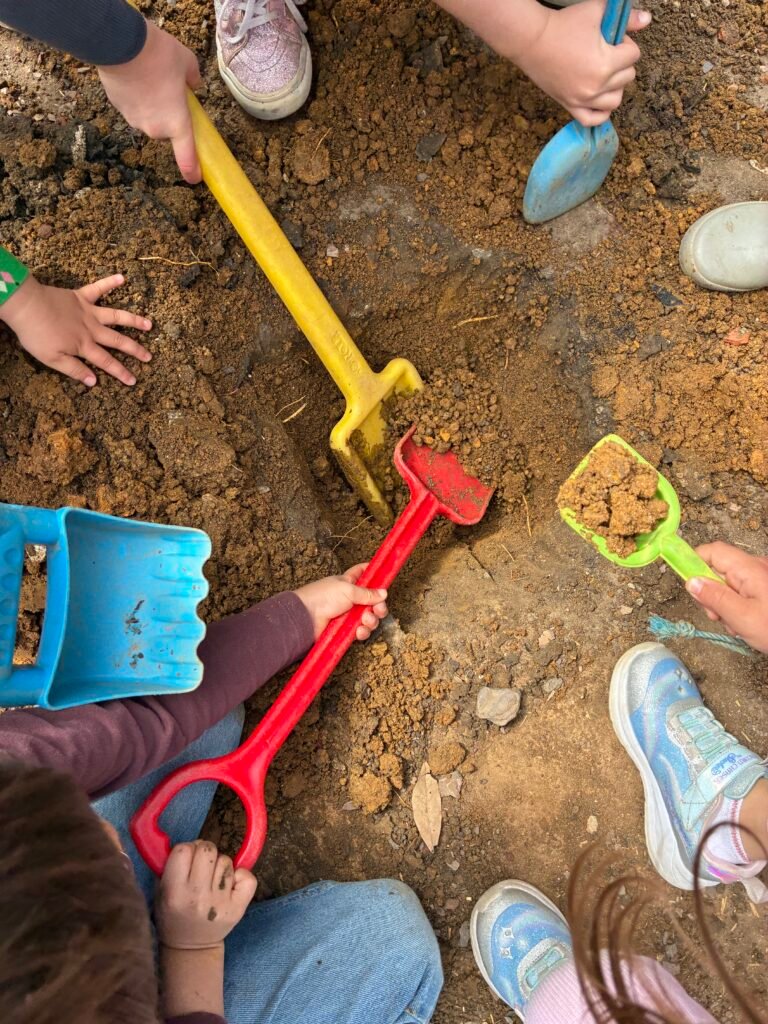
After our walk, the children placed the snails in their new area near the shelter with fresh leaves. Then we returned to school and told the other children and teachers about our discovery. The excitement continued and during the week a new idea slowly formed: we could make our own time capsule and bury it at school.
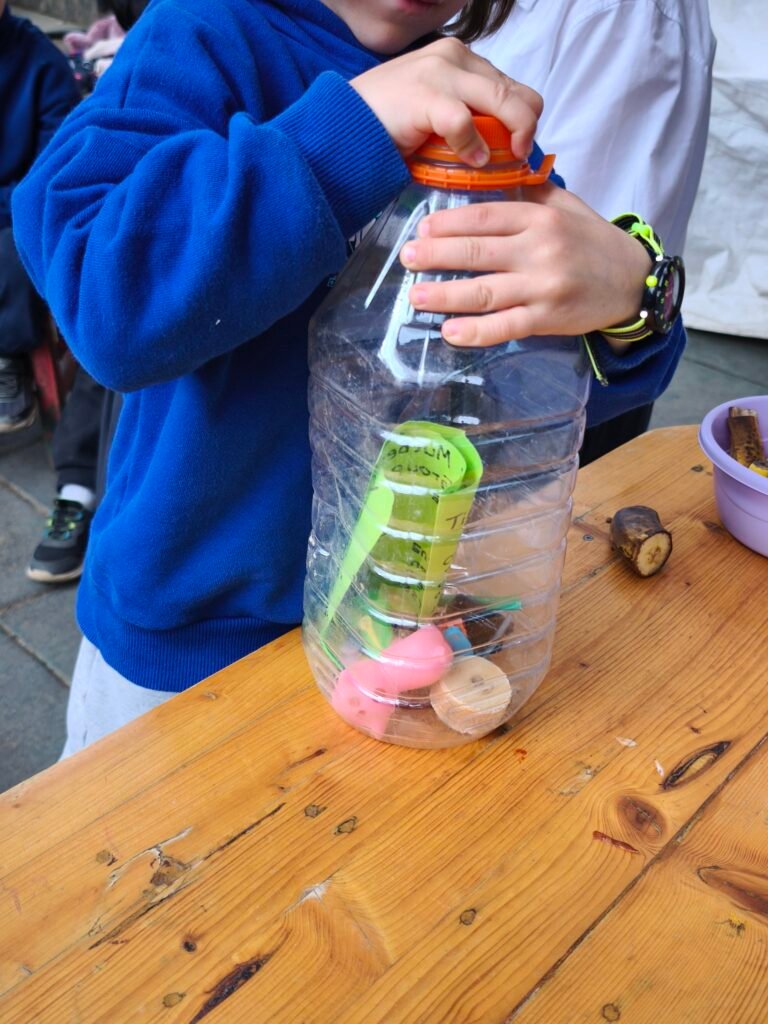
Each child brought a small personal item from home. Families became part of the process too, helping the children choose something meaningful to place inside. At school, the children presented their objects to one another and shared why they had chosen them. Together, we added a letter signed by each child, along with the contact details of the school manager, hoping that maybe in five, ten, or even twenty years, someone might find our capsule by accident, just as we had found the one in the forest.
The project lasted the whole week. It began with a simple forest walk and grew into conversations about time, memory, personal meaning and the traces we leave behind. The children experienced that something small from today can become a message for someone in the future.
For us as teachers, this project was a reminder that not all learning can be planned in advance. Sometimes the most meaningful experiences come from allowing space for curiosity, wonder and the unexpected. When we follow children’s questions and take their discoveries seriously, it can become the beginning of a rich project.
In a world that often moves quickly from one activity to the next, it is important to slow down, look closely and stay open to what appears along the way. Children naturally walk through the world with searching eyes. Our role is to walk beside them, notice with them and help turn these moments into shared learning.
Matthias Rank (OSİ 4-6 year old English teacher)